

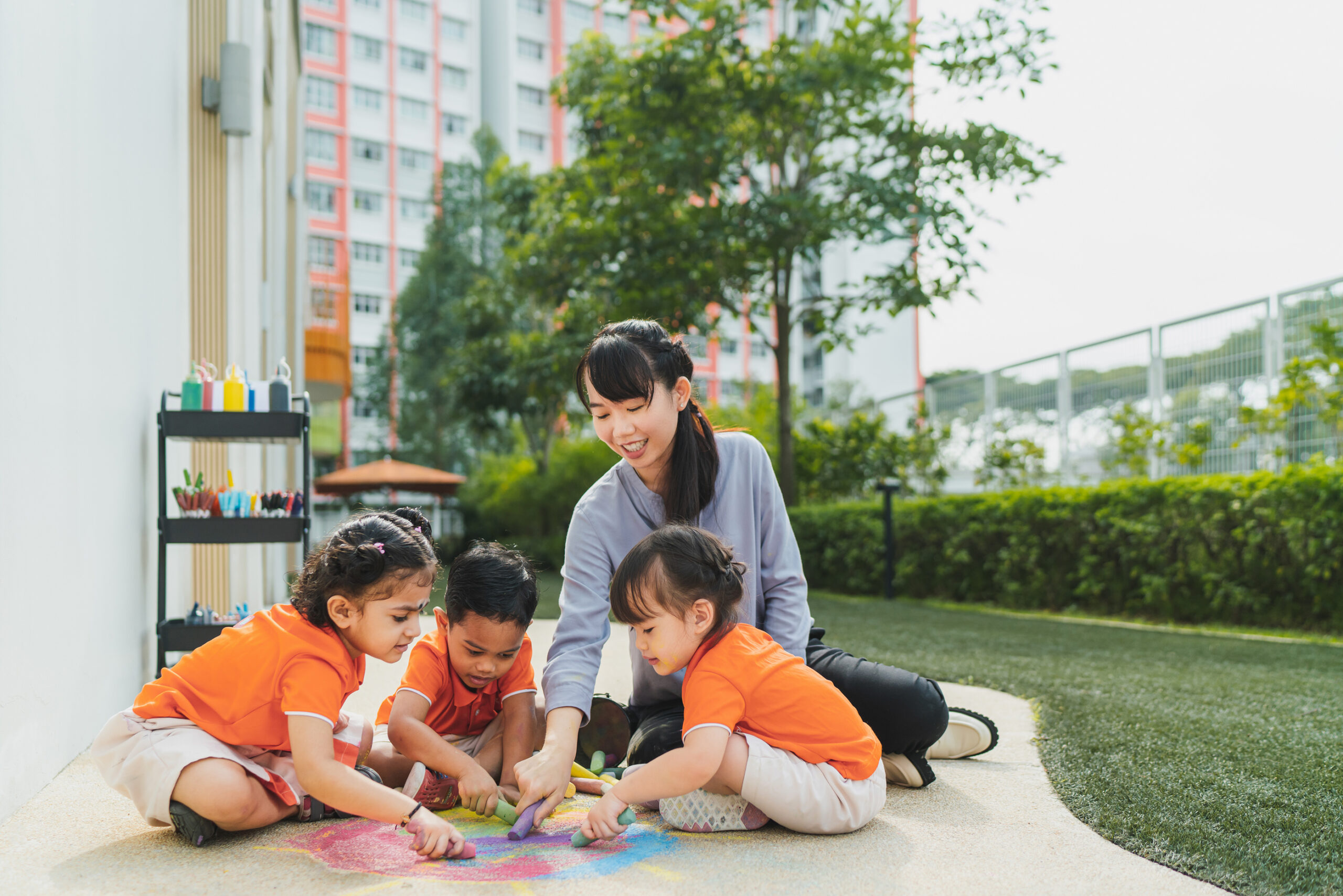
Finding the right early learning centre for your child can feel overwhelming. Parents want a place that nurtures creativity whilst building strong academic foundations. The best early childhood centres in Singapore understand that learning happens through both structured lessons and free exploration.
Why Balance Matters in Early Childhood Education
Young children learn best when education feels natural and enjoyable. A quality preschool Singapore families trust knows that forcing academic content too early can backfire. Research shows that children who experience balanced programmes develop stronger learning skills over time.
The brain develops rapidly during the preschool years, making this period crucial for setting learning patterns. When centres push academics without play, children often lose their natural curiosity. Quality programmes blend both approaches to create confident, capable learners.
The Role of Play in Child Development
Play isn’t just fun – it’s how children make sense of their world. Through imaginative games, children develop problem-solving skills and emotional intelligence. A good preschool Singapore programmes incorporate gives children plenty of time for unstructured exploration.
During play, children practise social skills like sharing, negotiating, and cooperating with peers. They build physical coordination through running, climbing, and manipulating objects. These experiences create neural pathways that support all future learning, including academic subjects.
Free play also helps children develop executive function skills like planning and self-control. When children choose their activities, they learn to make decisions and follow through. These abilities prove essential for school success later on.
Understanding Phonics and Its Importance
Phonics teaches children the relationship between letters and sounds in systematic ways. This foundation skill helps children decode new words independently when reading. A strong phonics programme builds confidence for tackling increasingly complex texts.
Children who master phonics early often become more fluent readers throughout their school years. They can focus on understanding meaning rather than struggling with individual words. This advantage extends beyond literacy into all academic subjects that require reading comprehension.
However, phonics instruction must be age-appropriate and engaging to be effective. Dry drill exercises can make children dislike reading before they’ve truly begun. Quality centres make phonics learning feel like games and adventures.
How Quality Centres Integrate Both Approaches
Structured Learning Through Play
The best centres create learning opportunities within playful contexts. Teachers might set up a pretend grocery shop where children practise writing shopping lists. This approach teaches letter formation whilst maintaining the joy of imaginative play.
Story time becomes interactive, with children acting out characters and predicting plot outcomes. Teachers weave phonics lessons into these activities by highlighting letter sounds naturally. Children absorb academic content without feeling pressured or bored.
Outdoor activities also provide learning chances when teachers guide observations about nature. Children might collect leaves and sort them by shape, building classification skills. These experiences show that learning happens everywhere, not just at desks.
Multi-Sensory Learning Experiences
Children learn through all their senses, so quality programmes engage multiple learning channels. Sand trays let children trace letters whilst feeling different textures. This approach helps cement letter recognition more effectively than paper-and-pencil tasks alone.
Music and movement activities teach rhythm patterns that support phonics understanding. Children clap out syllables in their names or march to alphabet songs. These activities make abstract concepts concrete and memorable for young minds.
Art projects incorporate literacy goals by encouraging children to write stories about their creations. Teachers scaffold writing attempts without taking over the process. Children feel proud of their efforts whilst building essential skills.
Individual Learning Styles and Paces
Recognising Different Learning Preferences
Every child processes information differently, and skilled teachers notice these individual patterns. Some children learn best through visual displays, whilst others need hands-on manipulation. Educators at a good preschool in Singapore adapt instruction to match each child’s strengths.
Kinesthetic learners might hop on letter shapes drawn on the playground. Visual learners benefit from colourful alphabet displays and picture books. Auditory learners respond well to songs, rhymes, and verbal instructions during activities.
Teachers observe children carefully to identify their preferred learning styles and interests. They then modify activities to ensure every child can access the curriculum successfully. This personalised approach prevents children from feeling frustrated or left behind.
Adapting to Individual Development
Children develop at different rates, especially in the preschool years. Some four-year-olds read simple books, whilst others are just learning letter names. Quality programmes meet children where they are rather than pushing everyone at the same pace.
Teachers provide extension activities for children who are ready for challenges. They also offer additional support for those who need more time to master skills. This flexibility ensures that all children experience success and maintain their love of learning.
Regular assessments help teachers track progress and adjust instruction accordingly. However, these evaluations focus on growth rather than comparison with peers. Children learn to celebrate their own achievements rather than competing with classmates.
Creating the Right Environment
Physical Spaces That Support Both Approaches
The classroom environment significantly influences how children learn and play. Well-designed spaces have clearly defined areas for different types of activities. A cosy reading corner invites quiet exploration of books and stories.
Art stations provide materials for creative expression whilst building fine motor skills. Building blocks encourage spatial reasoning and collaborative problem-solving. These varied spaces allow children to choose activities that match their current needs and interests.
Outdoor areas extend learning beyond classroom walls with gardens, sandboxes, and climbing equipment. Children develop gross motor skills whilst exploring scientific concepts like growth and weather. Nature provides endless opportunities for discovery and wonder.
Daily Routines That Balance Structure and Freedom
Successful programmes establish predictable routines that help children feel secure. Children know what to expect each day whilst having choices within that structure. Morning activities might include free play followed by a structured phonics lesson.
Circle time brings the group together for shared experiences like singing and storytelling. Small group activities allow for more personalised instruction and interaction. Independent work stations let children practise skills at their own pace.
Transitions between activities are smooth and purposeful, preventing chaos and confusion. Teachers use songs or visual cues to help children move from one activity to another. This organisation maximises learning time whilst maintaining a calm, enjoyable atmosphere.
Finding a good preschool Singapore parents can trust requires looking beyond surface features. The best programmes seamlessly blend play and academic learning to create well-rounded educational experiences. Children who attend these centres develop both the skills and love of learning needed for future success.